By Dr. Uzma Jabeen | MBBS, FCPS Pediatric Medicine | Consultant Pediatrician Last Reviewed: July 2026 | Child Health Club
This article has been medically reviewed for accuracy. It’s part of our commitment to providing parents with reliable, evidence-based child health information.
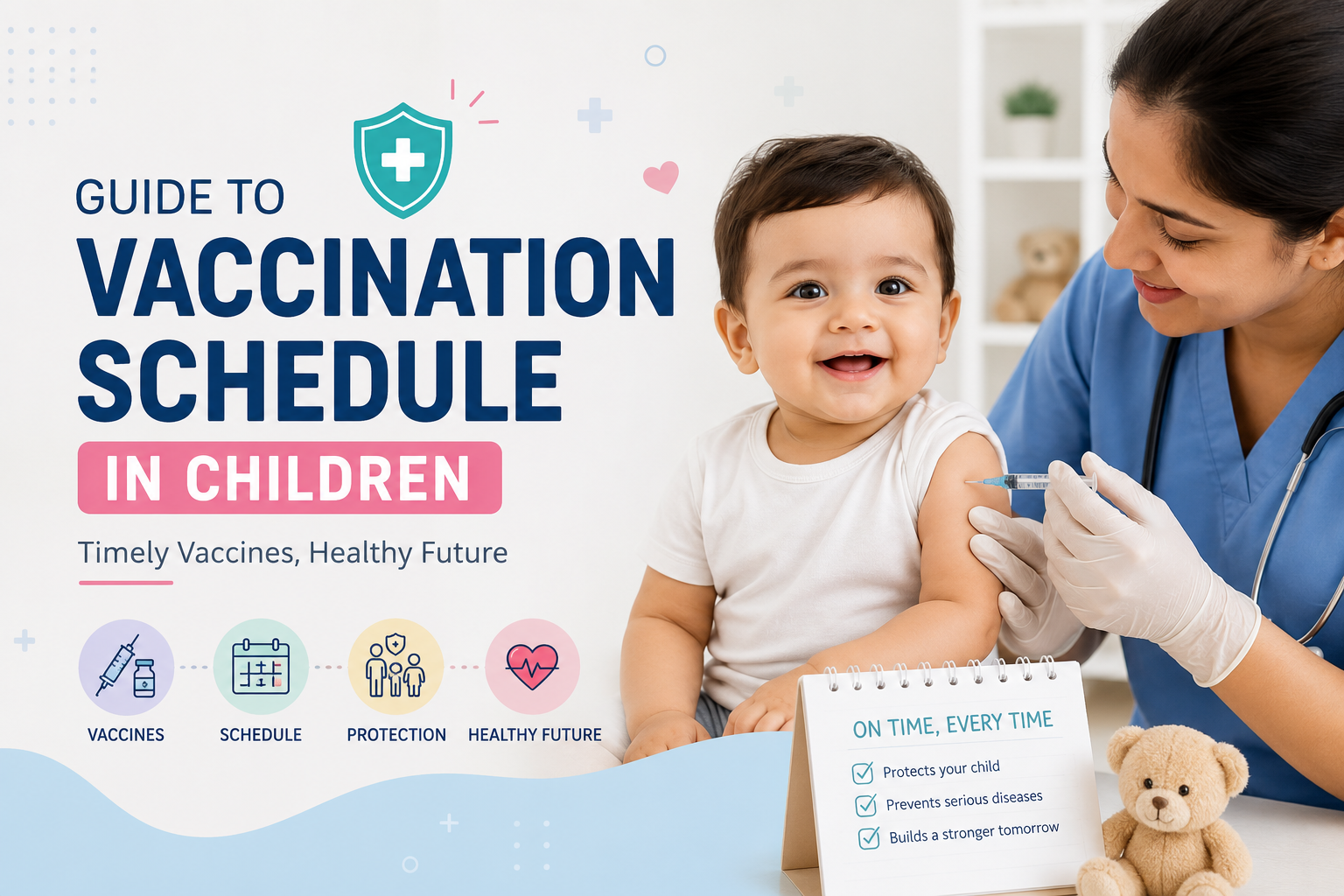
The first year of your baby’s life brings a lot of firsts — including their first set of vaccines. For new parents, the schedule can feel overwhelming: so many names, so many doses, so many appointments. This guide breaks down what’s happening, why it matters, and how to keep track of it all without the stress.
Why vaccines matter so early
A newborn’s immune system is still developing. Vaccines work by giving your baby’s body a safe preview of a disease, so it can build defenses before ever encountering the real thing. According to the World Health Organization and national pediatric health authorities, many of the diseases on the schedule — like whooping cough, measles, and polio — can be especially dangerous for infants and very young children, which is why protection starts so early.
Spacing out doses over the first year isn’t arbitrary either. It’s designed around how a baby’s immune system matures and how long protection from earlier doses (including any immunity passed from mother to baby) tends to last.
A month-by-month look at the first year
At birth Babies typically receive their first dose of the Hepatitis B vaccine before leaving the hospital, starting protection against a virus that can cause serious liver disease. In many countries, babies are also given the BCG vaccine at birth, which protects against tuberculosis. BCG isn’t part of the routine schedule in every country (the US, for example, doesn’t include it routinely), so check what applies where you live.
6 weeks This is usually the first “real” round of vaccines, often covering several diseases at once: diphtheria, tetanus, and pertussis (DTaP), polio (IPV), Hib (a bacteria that can cause meningitis), pneumococcal disease, and rotavirus (a common cause of severe diarrhea in infants).
10 weeks and 14 weeks These follow-up doses reinforce the protection started at 6 weeks. Multiple doses are needed for many vaccines because a single dose often isn’t enough to build strong, lasting immunity in a young immune system.
6 months By this point, your baby may also become eligible for their first seasonal flu vaccine, especially if you’re heading into flu season.
9 months Depending on where you live, this is often when the measles vaccine is introduced, along with completion of the Hepatitis B series in many schedules.
12 months Your baby’s first birthday often comes with a fresh set of vaccines: MMR (measles, mumps, rubella), chickenpox (varicella), and Hepatitis A — diseases your baby had less exposure risk to as a newborn, but more as they become mobile and social.
What’s actually normal after a vaccine
Mild side effects are common and usually a sign the immune system is responding, not a cause for alarm. These typically include:
- A sore, slightly swollen spot at the injection site
- Mild fever for a day or two
- Fussiness or slightly reduced appetite
- Sleepiness
What’s not typical: a fever above 104°F (40°C), a rash that spreads quickly, difficulty breathing, or unusual limpness. If you notice any of these, contact your doctor right away.
Staying on track without the stress
Between newborn sleep deprivation and a packed calendar of pediatrician visits, it’s easy to lose track of exactly what’s due and when — especially with catch-up doses or if an appointment gets rescheduled.
That’s exactly why we built our Vaccination Schedule Calculator. Just enter your baby’s date of birth, and it lays out a clear, personalized timeline of every milestone from birth through age six — showing what should already be done, what’s due soon, and what’s still ahead.
“Try the Vaccination Schedule Calculator.”A few things to keep in mind
- Schedules can vary slightly by country — always confirm your baby’s exact schedule with your pediatrician or local health authority.
- Missing a dose isn’t a crisis. Catch-up schedules exist for exactly this reason — just let your doctor know at the next visit.
- Keep a physical or digital vaccination record. Many schools and childcare centers require proof of immunization later on.
Vaccines are one of the simplest, most effective ways to protect your baby during their most vulnerable early months. Staying organized doesn’t have to be complicated — a little tracking now saves a lot of guesswork later.
Sources
This guide draws on publicly available guidance from recognized health authorities, including the World Health Organization (WHO) immunization schedules and national pediatric immunization guidelines (e.g., CDC in the United States). Always refer to your own country’s official health authority for the most current, region-specific schedule.
About the Author
Dr. Uzma Jabeen is a Consultant Pediatrician with MBBS and FCPS in Pediatric Medicine. With extensive clinical experience in neonatal and child health, she founded Child Health Club to bridge the gap between complex medical research and everyday parenting. Her mission is simple: every child deserves care backed by evidence, and every parent deserves to understand it. She writes regularly on neonatal outcomes, childhood illness, and evidence-based parenting.
© Child Health Club. All rights reserved. Please do not reproduce without permission.