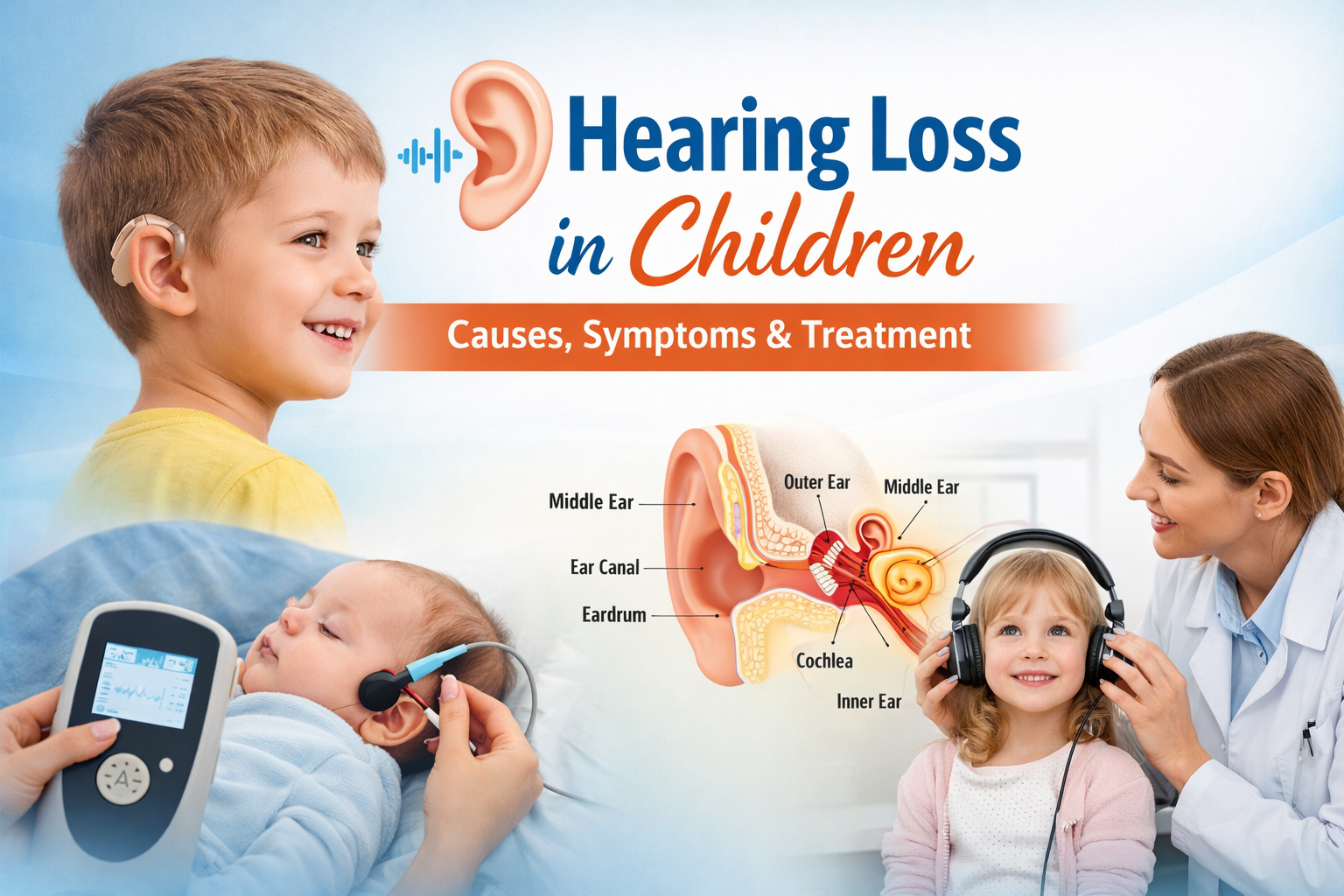
Hearing loss in children is a significant health condition that can affect speech, language development, learning, and social interaction. Early detection and timely intervention are crucial in ensuring optimal developmental outcomes.
🔍 What is Hearing Loss in Children?
Hearing loss in children is defined as an impairment in the ability to hear sounds at levels considered normal for age.
📊 Epidemiology
The prevalence of hearing loss in children has remained relatively stable over time:
- Approximately 1.1 per 1000 newborns have permanent bilateral severe to profound hearing loss
- Around 1–2 per 1000 newborns have mild to moderate or unilateral hearing loss
With the implementation of universal newborn screening programs, the age of diagnosis has significantly decreased. Studies show that hearing loss can now be identified as early as 10 weeks of age, compared to 12–20 months in the past .
⏳ Causes of Hearing Loss in Children
👶 Congenital Causes (Present at Birth)
- Congenital infections (e.g., CMV, rubella, syphilis)
- Genetic syndromes (e.g., CHARGE syndrome, Branchio-oto-renal syndrome)
- Temporal bone abnormalities
- Prematurity
- NICU-related complications (e.g., sepsis, hyperbilirubinemia, prolonged ventilation, ototoxic medications)
- Genetic mutations
🧒 Acquired Causes (After Birth)
- Trauma
- Infections (e.g., otitis media)
- Ototoxic medications
- Autoimmune disorders
📈 Severity of Hearing Loss
Hearing loss is categorized based on hearing thresholds:
- Mild: 21–40 dB
- Moderate: 41–70 dB
- Severe: 71–95 dB
- Profound: >95 dB
👉 Deafness is commonly used to describe profound hearing loss.
🔬 Types of Hearing Loss
- Sensorineural Hearing Loss:
Caused by damage to the cochlea, auditory nerve, or brain pathways - Conductive Hearing Loss:
Due to problems in the outer or middle ear - Mixed Hearing Loss:
Combination of both sensorineural and conductive components
🧪 Newborn Hearing Screening
Early screening plays a vital role in early diagnosis:
- Otoacoustic Emissions (OAE):
Measures sounds produced by the inner ear - Auditory Brainstem Response (ABR):
Assesses the auditory pathway from ear to brainstem - Automated ABR (AABR):
Commonly used in NICU settings
⚠️ Signs and Symptoms of Hearing Loss in Children
- Delayed speech and language development
- Lack of response to sounds or name
- Difficulty following instructions
- Frequent need for repetition
- Poor academic performance
⚠️ Consequences of Hearing Loss
Untreated hearing loss may lead to:
- Speech and language delays
- Cognitive difficulties (memory, attention, executive function)
- Social and behavioral challenges
- Reduced self-esteem and increased risk of anxiety or depression
🧾 Evaluation and Diagnosis
Assessment should be individualized and based on:
- Family and medical history
- Age of onset
- Type and severity of hearing loss
- Unilateral vs bilateral involvement
Diagnostic tools include:
- CT scan or MRI of temporal bones
- Genetic testing
- Ophthalmologic evaluation
- Screening for congenital infections (e.g., CMV)
🛠️ Management and Treatment Options
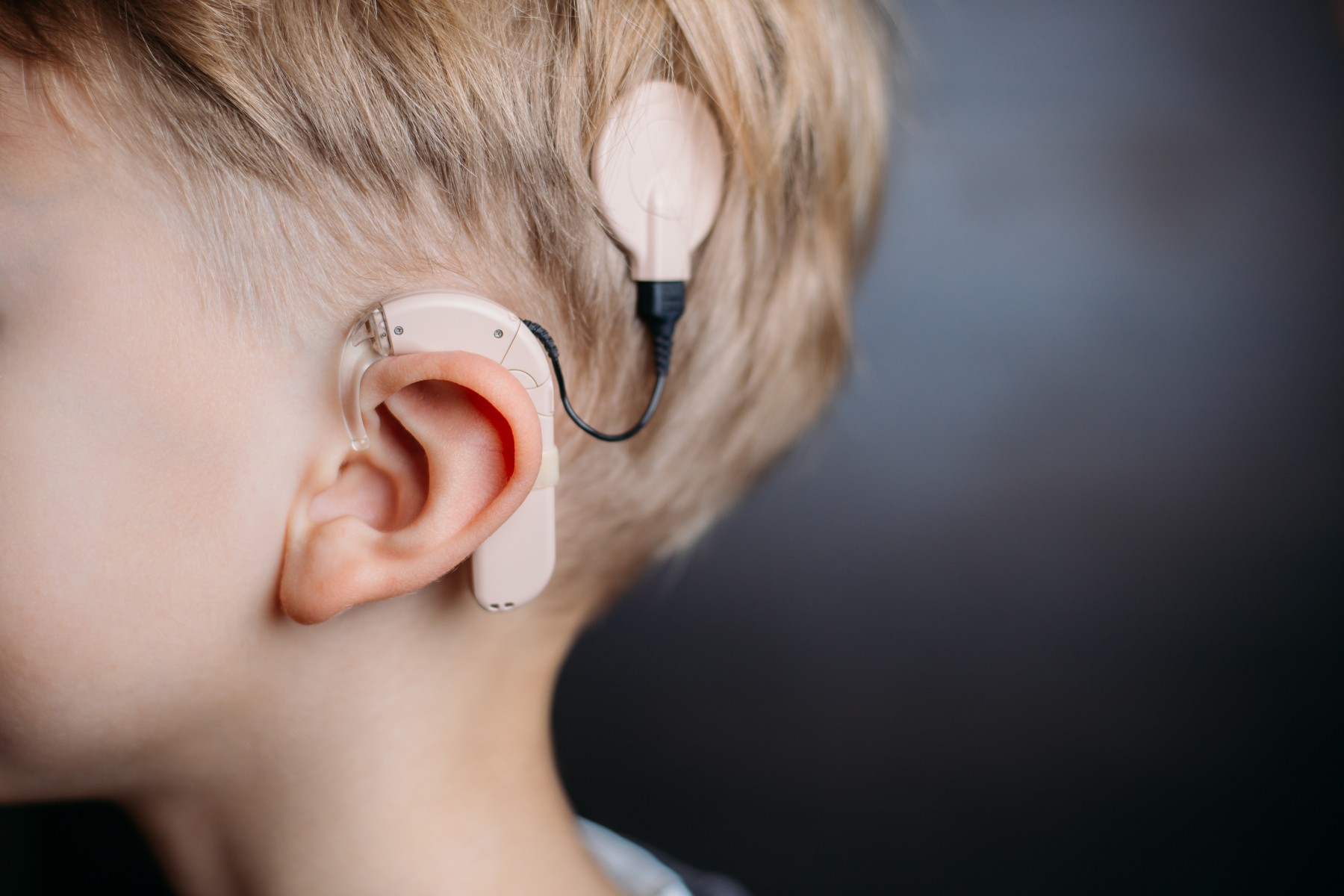
- Hearing aids
- Cochlear implants
- Speech and language therapy
- Educational and behavioral support
👉 Early intervention significantly improves long-term outcomes.
💡 Final Thoughts
Hearing loss in children is a manageable condition when identified early. With advancements in screening and treatment, children with hearing impairment can lead healthy, productive, and fulfilling lives.
👉 If you suspect hearing difficulties in a child, seek medical evaluation promptly.
⚠️ Disclaimer
This article is intended for educational purposes only and should not be considered medical advice. Please consult a qualified healthcare professional for diagnosis and treatment.
✍️ References
- Lieu JEC, et al. Hearing Loss in Children. JAMA, 2020
- Wroblewska-Seniuk KE, et al. Pediatric Research, 2017
- Holland Brown T, Chadha S. Paediatrics and Child Health, 2024
👩⚕️ Author
Dr. Uzma Jabeen
Consultant Pediatrician
MBBS, FCPS (Pediatrics)
Postgraduate Diploma in Public Health
CHPE (Certified Health Professions Educationist)
Professional Diploma in Quality Management in Education
🌿 About the Author
Dr. Uzma Jabeen is a dedicated Consultant Pediatrician with extensive experience in child health, early diagnosis, and developmental care. She has a strong academic background and a special interest in improving pediatric healthcare outcomes through education, early intervention, and evidence-based practice.